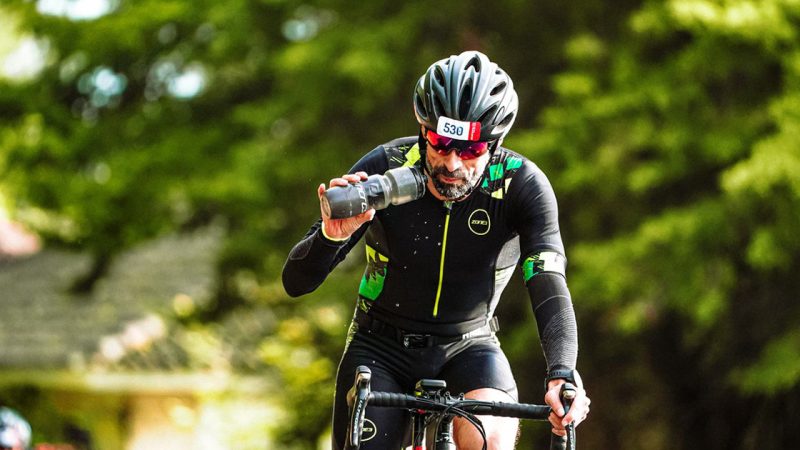
Once a ride stretches beyond two or three hours, nutrition stops being a minor detail and becomes one of the deciding factors in how the ride actually goes. The right foods, eaten at the right times, can be the difference between finishing strong and grinding through the final hours on empty. This guide focuses specifically on longer endurance efforts — century rides, gran fondos, multi-hour gravel adventures, and similar events — and the foods that work well for them.
Table of Contents
- What Makes a Food “Good” for Endurance Riding
- Real Food vs Sports Nutrition Products
- Best Foods by Category
- Building a Nutrition Plan for a Century Ride or Longer
- Foods and Strategies to Avoid
- Sample Endurance Ride Nutrition Timeline
- Training Your Gut for Endurance Nutrition
- Special Considerations: Heat, Altitude, and Multi-Day Events
- Common Mistakes to Avoid
- FAQ
What Makes a Food “Good” for Endurance Riding
Not every nutritious food translates well to in-the-saddle eating during a long ride. The best endurance riding foods generally share several characteristics:
- Primarily carbohydrate-based — the main fuel source for sustained, moderate-to-hard effort
- Easily digestible — low in fat and fibre, both of which slow digestion and can cause gastrointestinal discomfort during exercise
- Portable and practical to eat while riding — minimal preparation, easy to access from a jersey pocket or bag, and manageable to eat one-handed
- Palatable over many hours — flavour fatigue is a genuine issue on very long rides; foods you enjoy at hour one may become unappealing by hour five
- Appropriately sized — small, frequent intake is generally easier to digest than large, infrequent amounts
Real Food vs Sports Nutrition Products
Sports Nutrition Products (Gels, Chews, Bars, Drink Mixes)
Advantages:
- Precisely formulated carbohydrate content, making intake calculations straightforward
- Highly portable and shelf-stable
- Designed specifically for easy digestion during exercise
- Often include electrolytes alongside carbohydrate
Disadvantages:
- Can become unappealing over very long durations (flavour fatigue)
- Generally more expensive than equivalent real-food alternatives
- Some riders experience gastrointestinal sensitivity to certain ingredients (particular sweeteners, for example) in some products
Real Food Options
Advantages:
- Often more palatable and varied over long durations
- Generally less expensive
- Some riders tolerate real food better than concentrated sports products
Disadvantages:
- Less precise carbohydrate content, making intake tracking less exact
- Can be messier or less convenient to eat while riding
- Some options (particularly higher-fat or higher-fibre foods) digest more slowly and may not suit harder efforts
The Practical Approach
Many experienced endurance riders use a combination — sports nutrition products for convenience and precision during harder efforts or technical sections, supplemented with real food for variety and palatability during easier sections or extended events, particularly beyond the 4–5 hour mark when flavour fatigue becomes a genuine factor.
Best Foods by Category
Easily Digestible Carbohydrate Sources (Real Food)
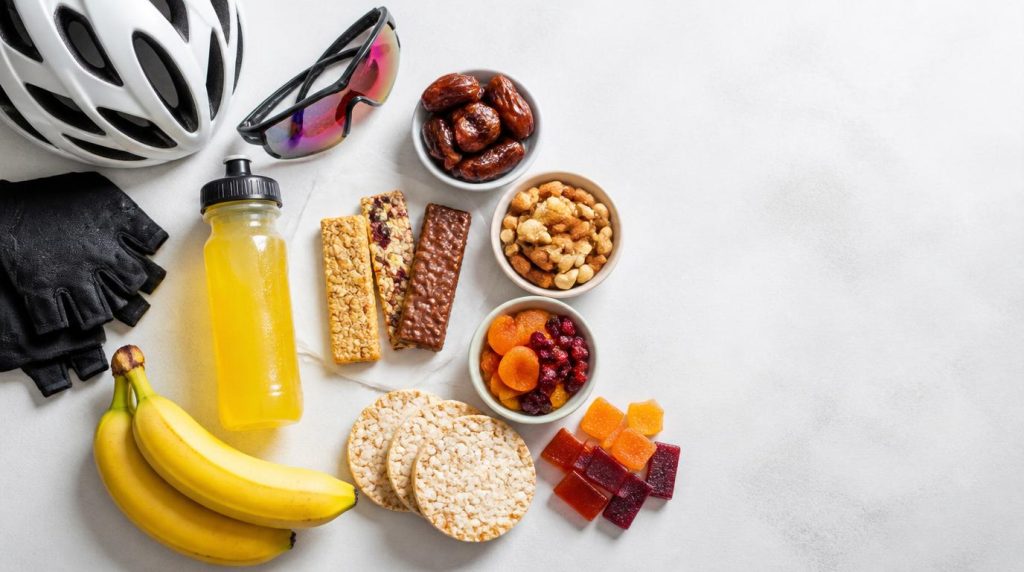
- Bananas — a classic choice, easy to digest, naturally portable, providing carbohydrate and some potassium
- Dates — concentrated natural sugars, compact, and easy to carry
- Rice cakes (savoury or sweet) — popular among endurance and professional cyclists for their easy digestibility and customisable flavour
- White bread sandwiches with jam or honey — simple, easily digestible carbohydrate, easy to make at home before a long event
- Dried fruit (raisins, apricots, mango) — compact, shelf-stable, and carbohydrate-dense
Sports Nutrition Products
- Energy gels — concentrated carbohydrate (typically 20–30g per gel), fast and easy to consume, widely available in various formulations
- Energy chews/blocks — similar carbohydrate content to gels but in a chewable format some riders prefer
- Energy bars — generally slightly higher in fibre and sometimes fat than gels, making them somewhat slower to digest but often more satisfying
- Carbohydrate drink mixes — combine hydration and fuelling, useful for riders who prefer not to eat solid food during harder efforts
Savoury Options (Useful for Longer Events)
- Small sandwiches (ham, cheese, or simple fillings) — provide variety from sweet options, useful on multi-hour events
- Salted potatoes or rice cakes — popular among ultra-endurance and gravel riders, providing both carbohydrate and sodium
- Pretzels or salted crackers — easy to digest, providing sodium alongside carbohydrate, useful for hot conditions
Electrolyte-Focused Options
- Electrolyte tablets dissolved in water — convenient, precise sodium content, easy to carry in tablet form before dissolving
- Commercial sports drinks — combine carbohydrate and electrolytes in one product
- Salted foods (pretzels, salted nuts in moderation) — provide sodium through real food alongside other nutrients
Building a Nutrition Plan for a Century Ride or Longer
Step 1: Estimate Total Ride Duration
Use your expected average pace and the event distance to estimate total time on the bike, including any planned stops.
Step 2: Calculate Approximate Carbohydrate Needs
Using the general guideline of 30–90g of carbohydrate per hour (depending on intensity and individual tolerance, as covered in our cycling nutrition guide), estimate your total carbohydrate needs for the full ride duration.
Step 3: Plan a Mix of Sources
Rather than relying entirely on one food type, plan a mix — for example, gels for the harder sections or climbs, real food (bananas, sandwiches) for easier, flatter sections, and a carbohydrate drink mix throughout for baseline fuelling and hydration combined.
Step 4: Account for Event Aid Stations
If riding a supported event with aid stations, check in advance what will be provided (often bananas, simple sandwiches, sports drink) and plan your carried nutrition to supplement rather than fully duplicate what will be available, reducing how much you need to personally carry.
Step 5: Build in Some Flexibility
Plan slightly more nutrition than your calculated minimum, since pacing, weather, or unexpected delays can extend ride duration beyond initial estimates, and running short of fuel late in a long ride is a difficult position to recover from.
Foods and Strategies to Avoid
High-Fat Foods During the Ride
Fat digests slowly and can cause gastrointestinal discomfort if eaten in significant quantities during exercise, even though fat is a perfectly normal part of an overall balanced diet outside of the ride itself.
High-Fibre Foods During the Ride
Similar to fat, fibre slows digestion and can contribute to gastrointestinal distress during exercise, even from generally healthy foods that work well in your normal diet outside of riding.
Untested New Foods on Event Day
Trying an unfamiliar food or product for the first time during an important event, rather than testing it during training, risks unexpected gastrointestinal issues at the worst possible time.
Relying Entirely on Aid Station Availability
If riding a supported event, do not assume aid stations will have exactly what you need, when you need it, in your preferred form — carrying some personal nutrition as backup avoids being caught short if an aid station runs low or does not offer suitable options.
Sample Endurance Ride Nutrition Timeline
This sample assumes a 5-hour century ride at moderate-hard effort, illustrating one practical approach (individual needs and preferences will vary):
| Time | Nutrition |
|---|---|
| Pre-ride (2–3 hrs before) | Carbohydrate-focused meal (oatmeal, toast with jam) |
| 0:00–1:00 | Water only, relying on pre-ride fuelling |
| 1:00 | First gel or banana, begin regular intake |
| 1:00–2:00 | Carbohydrate drink mix in bottle, sipped regularly |
| 2:00 | Small sandwich or rice cake (real food variety) |
| 2:00–3:00 | Continue carbohydrate drink, alternate gels/real food |
| 3:00 | Gel or chews, particularly if approaching a harder climbing section |
| 3:00–4:00 | Maintain regular intake, salted food if hot conditions |
| 4:00 | Banana or dates, final solid food before the closing stretch |
| 4:00–5:00 | Carbohydrate drink, gel if needed for a final push |
| Post-ride | Recovery meal/shake combining carbohydrate and protein |
This is illustrative, not prescriptive — adjust based on your own tested tolerance, the specific event’s terrain, and conditions on the day.
Training Your Gut for Endurance Nutrition
Why Gut Training Matters
Gastrointestinal tolerance for higher carbohydrate intake rates during exercise can be improved over time through deliberate practice, similar to how other aspects of fitness adapt to training stimulus.
How to Practice
Gradually increase your during-ride carbohydrate intake across training rides over several weeks, starting from a comfortable baseline and progressing toward your target intake rate for an important event, allowing your digestive system to adapt gradually rather than attempting a large jump in intake without preparation.
Why This Matters for Events
Riders who have not practiced higher carbohydrate intake rates often experience gastrointestinal distress when attempting to follow more aggressive nutrition guidelines for the first time during an important event, even if the carbohydrate amount itself is within generally recommended ranges. Practice genuinely matters here, not just theoretical knowledge of the guidelines.
Special Considerations: Heat, Altitude, and Multi-Day Events
Hot Conditions
Increased sweat rate raises both fluid and electrolyte needs (see our hydration guide for detailed guidance), and appetite for solid food sometimes decreases in heat, making easily digestible, palatable options and adequate fluid-based carbohydrate intake particularly valuable.
Altitude
Appetite can be suppressed at higher altitudes for some individuals, while energy demands may be slightly elevated, making deliberate, planned intake (rather than relying on appetite cues) particularly important.
Multi-Day Events
Beyond single-ride nutrition, overall daily energy balance across the full event becomes important — ensuring adequate total intake (not just during riding hours) to support both the current day’s performance and recovery for subsequent days, where accumulated under-fuelling across multiple days can significantly impair later-stage performance.
Common Endurance Nutrition Mistakes to Avoid
Mistake 1: Under-Fuelling Early to “Save” Food for Later
Some riders ration nutrition early in a long ride, intending to fuel more later. This often backfires, since early under-fuelling can create a deficit that is difficult to recover from later, even with increased intake in subsequent hours.
Mistake 2: Relying Solely on Appetite as a Fuelling Guide
Appetite during exercise is not always a reliable indicator of actual energy needs, particularly during hard efforts or in heat, where appetite can be suppressed despite genuine fuelling needs. Planned, scheduled intake is generally more reliable than waiting to feel hungry.
Mistake 3: Not Practicing Nutrition Strategy in Training
As covered in the gut training section, attempting an ambitious nutrition plan for the first time during an important event significantly increases the risk of gastrointestinal issues that could have been identified and addressed during training.
Mistake 4: Ignoring Sodium on Long, Hot Efforts
Focusing exclusively on carbohydrate while neglecting sodium replacement on long, hot rides can contribute to cramping or, in rare extreme cases, complications related to inadequate electrolyte balance.
Mistake 5: Packing Only One Type of Food
Flavour fatigue is real on very long rides. Packing a variety of textures and flavours (sweet and savoury, solid and liquid) helps maintain appetite and willingness to keep eating through the later, more difficult hours of a long event.
FAQ
What is the best food to eat during a long bike ride?
There is no single best option — a combination of easily digestible carbohydrate sources works well, including bananas, dates, rice cakes, energy gels, and small sandwiches. Variety helps prevent flavour fatigue on very long rides, and a mix of real food and sports nutrition products is a practical approach for most riders.
How much food do I need for a century ride?
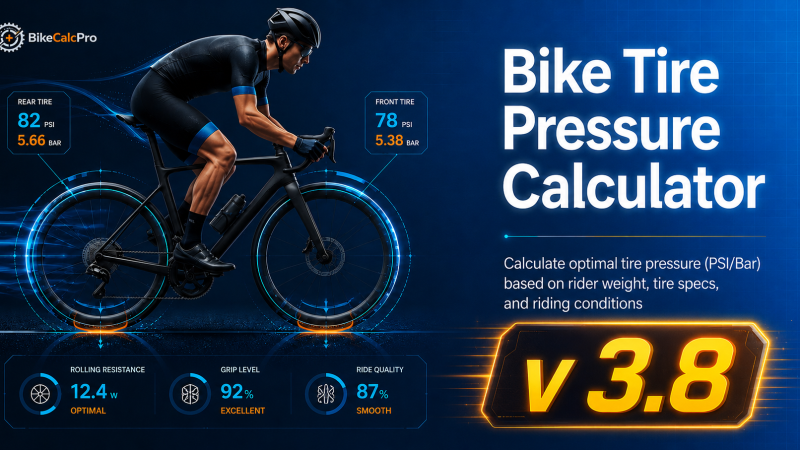
This depends on your pace, intensity, and individual carbohydrate tolerance, but a general guideline is roughly 30–90 grams of carbohydrate per hour during the ride, in addition to a substantial pre-ride meal. Use our Tire Pressure Calculator to make sure your setup is dialled in too, since an inefficient bike setup adds unnecessary energy demand on top of nutrition needs.
Should I eat real food or use energy gels for long rides?
Both have a place. Gels offer convenience and precise carbohydrate content, particularly useful during harder efforts, while real food (bananas, sandwiches, rice cakes) offers better palatability over many hours and helps prevent flavour fatigue. Many experienced endurance riders use a combination of both.
How do I train my gut to handle more carbohydrate during exercise?
Gradually increase your during-ride carbohydrate intake across several weeks of training rides, starting from a comfortable baseline and building toward your target intake rate for an important event. This allows gradual digestive adaptation rather than risking gastrointestinal distress from a sudden increase.
What foods should I avoid during a long bike ride?
High-fat and high-fibre foods generally digest more slowly and can cause gastrointestinal discomfort during exercise, even though they are perfectly healthy as part of your normal diet outside of riding. Also avoid trying unfamiliar foods for the first time during an important event.
Do I need electrolytes during a long ride, or just carbohydrate?
For rides longer than 60–90 minutes, particularly in heat, electrolytes (primarily sodium) become important alongside carbohydrate, since both are lost through sweat. See our hydration guide for more detail on electrolyte needs specifically.
Summary
Endurance cycling nutrition is about combining the right types of food, in the right amounts, at the right intervals — and practicing that plan well before it matters most.
Key takeaways:
- Prioritise easily digestible, primarily carbohydrate-based foods during long rides
- Combine real food and sports nutrition products for variety and practicality over many hours
- Build a nutrition plan based on estimated ride duration and carbohydrate needs, with some built-in flexibility
- Train your gut gradually to handle higher carbohydrate intake rates before relying on them for an event
- Don’t neglect sodium and electrolytes alongside carbohydrate, particularly in heat
Make sure your bike is as ready as your fuelling plan. Check your tire pressure before your next long ride with our Tire Pressure Calculator →