Nutrition is one of the most underrated performance variables in cycling. You can have the perfect bike fit, ideal tire pressure, and a well-structured training plan, and still ride poorly if you run out of fuel halfway through a ride — a problem entirely within your control with the right preparation.
This guide breaks cycling nutrition down into three practical windows — before, during, and after your ride — with general guidelines you can apply regardless of your specific goals or experience level.
Table of Contents
- Why Cycling Nutrition Matters
- Understanding Energy Systems on the Bike
- What to Eat Before a Ride
- What to Eat During a Ride
- What to Eat After a Ride
- Nutrition by Ride Duration
- Carbohydrates, Protein, and Fat: Roles in Cycling
- Practical Food Examples
- Common Mistakes to Avoid
- FAQ
Why Cycling Nutrition Matters
Your body has limited stored energy available for exercise, primarily in the form of glycogen (stored carbohydrate) in your muscles and liver. For shorter, lower-intensity rides, these stores are often sufficient without much additional intake. For longer or harder rides, depleting these stores leads to a sharp, often sudden drop in performance and energy — commonly called “bonking” or “hitting the wall.”
Proper nutrition before, during, and after a ride addresses three distinct needs:
- Before — ensuring adequate energy stores are available before you start
- During — replacing energy used during longer or harder efforts, since your body’s stored glycogen alone is often insufficient for rides beyond roughly 90 minutes at moderate-to-high intensity
- After — supporting recovery and adaptation, replenishing depleted glycogen stores and providing the building blocks for muscle repair
Understanding Energy Systems on the Bike
Your body draws on different fuel sources depending on intensity and duration, which helps explain why nutrition needs change with ride type.
Fat as Fuel
At lower intensities (easy, Zone 1–2 efforts), your body relies more heavily on fat as a fuel source. Fat stores are extensive even in lean individuals, which is part of why genuinely easy, long rides can sometimes be completed with relatively modest additional intake compared to their duration.
Carbohydrate as Fuel
As intensity increases, your body shifts toward relying more heavily on carbohydrate (glycogen) as the primary fuel source, since carbohydrate can be metabolised more rapidly to meet higher energy demands. This is why harder efforts deplete glycogen stores faster, even over a shorter duration, compared to an easier ride of similar length.
Why This Matters Practically
A genuinely easy 90-minute ride may require relatively little additional fuelling beyond normal eating patterns. A hard 90-minute ride with significant climbing or high-intensity efforts can deplete glycogen stores meaningfully faster, requiring more deliberate fuelling during the ride itself to avoid a performance drop-off.
What to Eat Before a Ride
Timing
- 2–3 hours before: A more substantial meal, combining carbohydrate with moderate protein, allowing adequate digestion time before the ride begins
- 30–60 minutes before: A smaller, easily digestible carbohydrate-focused snack if the earlier meal was light or if the ride is particularly demanding
What to Prioritise
- Carbohydrates — the primary focus, to ensure glycogen stores are well-stocked before you start
- Moderate protein — supports the meal’s overall nutritional balance without being the primary focus
- Lower fat and fibre — both digest more slowly, and consuming large amounts shortly before a ride can cause gastrointestinal discomfort during exercise
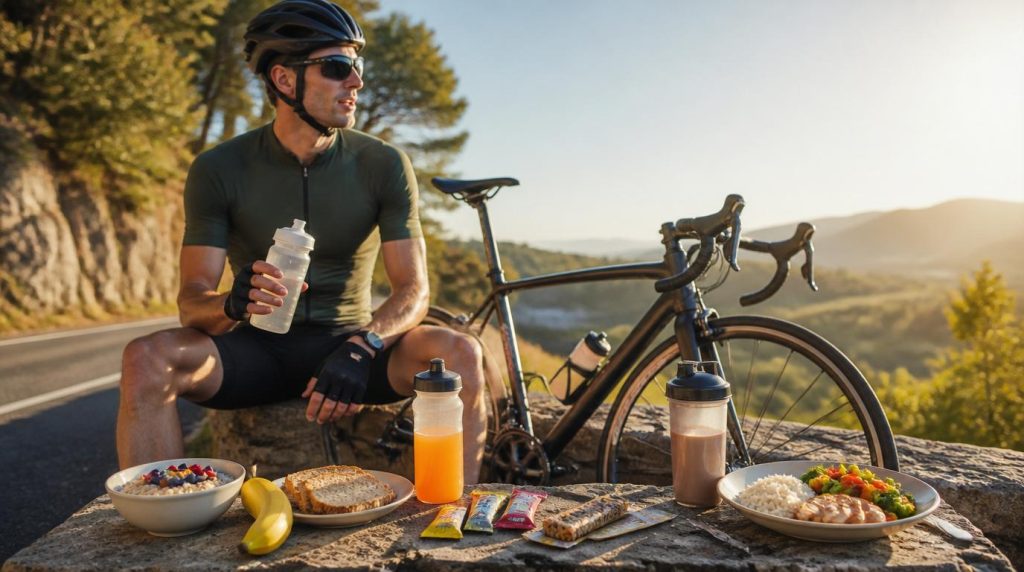
Practical Pre-Ride Meal Examples
- Oatmeal with banana and honey
- Toast with jam and a banana
- Rice or pasta with a light sauce, eaten a few hours before
- A banana or energy bar if time is limited before a shorter or less demanding ride
What to Eat During a Ride
When Fuelling During a Ride Becomes Important
For rides under approximately 60–90 minutes at low-to-moderate intensity, your body’s existing glycogen stores, combined with adequate pre-ride fuelling, are often sufficient without additional intake during the ride itself. Beyond this duration, or for harder efforts regardless of duration, deliberate fuelling during the ride becomes increasingly important to maintain performance and avoid bonking.
General Carbohydrate Intake Guidelines During Exercise
| Ride Duration/Intensity | General Carbohydrate Guideline |
|---|---|
| Under 60–90 min, easy-moderate | Often minimal additional intake needed |
| 1–2.5 hours, moderate-hard | Roughly 30–60 grams of carbohydrate per hour |
| Over 2.5 hours, or very high intensity | Up to 60–90+ grams of carbohydrate per hour, for well-trained individuals |
Important: These are general guidelines, not individual prescriptions. Tolerance for carbohydrate intake during exercise varies between individuals and can be trained over time. Start conservatively and adjust based on your own experience and any gastrointestinal tolerance.
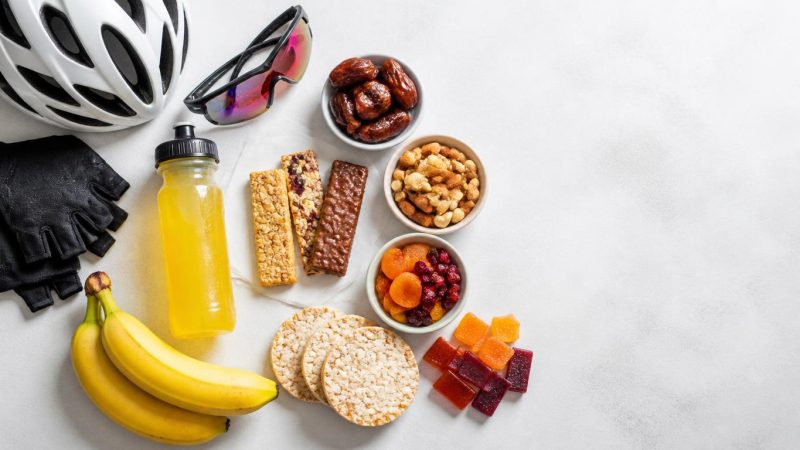
Practical During-Ride Fuelling Options
- Energy gels (typically 20–30g carbohydrate each)
- Bananas or other easily portable fruit
- Energy bars or chews
- Sports drinks providing both carbohydrate and electrolytes
- Simple options like dried fruit or small sandwiches for longer, lower-intensity rides
Hydration During the Ride
Fluid needs vary significantly based on temperature, humidity, individual sweat rate, and intensity, making a single universal recommendation unreliable. A commonly cited general starting guideline is approximately 500–750 ml per hour in moderate conditions, adjusted upward significantly in hot or humid conditions and downward in cool conditions. For rides over 60–90 minutes, especially in heat, including electrolytes (sodium in particular) alongside plain water helps maintain fluid balance and reduce cramping risk in susceptible individuals.
What to Eat After a Ride
The Recovery Window
While the once-popular idea of a strict, narrow “30-minute window” for post-ride nutrition has been somewhat overstated in more recent research, eating a balanced recovery meal or snack reasonably soon after a hard or long ride (within a couple of hours) does support efficient glycogen replenishment and muscle repair, particularly if your next meal would otherwise be significantly delayed.
What to Prioritise
- Carbohydrate — to begin replenishing depleted glycogen stores, particularly important if you have another hard ride or training session within the next 24 hours
- Protein — supports muscle repair and adaptation following the training stress of the ride
- Fluids and electrolytes — replacing what was lost through sweat during the ride
A General Practical Guideline
A combined intake of roughly 1.0–1.2 grams of carbohydrate per kilogram of body weight, alongside 20–25 grams of protein, in the hours following a demanding ride is a reasonable general starting point, though individual needs vary based on ride intensity, duration, and personal goals.
Practical Post-Ride Recovery Examples
- Chocolate milk or a recovery shake combining carbohydrate and protein
- Greek yoghurt with fruit and granola
- A balanced meal combining a protein source, carbohydrate, and vegetables, if timed appropriately after the ride
Nutrition by Ride Duration
Short Rides (Under 60 Minutes)
Normal eating patterns, without significant special preparation, are generally sufficient for most riders, provided the pre-ride meal was reasonably balanced.
Moderate Rides (1–2.5 Hours)
Pre-ride fuelling becomes more important, and during-ride carbohydrate intake (roughly 30–60g per hour) is worth considering, particularly for harder efforts or if you have not eaten adequately beforehand.
Long Rides (Over 2.5 Hours)
Deliberate during-ride fuelling becomes important to avoid significant performance decline, with carbohydrate intake guidelines toward the higher end of the general ranges, alongside careful attention to hydration and electrolyte balance, particularly in hot conditions.
Multi-Day Rides or Touring
Beyond single-ride nutrition, multi-day efforts require attention to overall daily energy balance, ensuring adequate total intake across the day (not just during riding hours) to support both performance and recovery for the following day’s riding.
Carbohydrates, Protein, and Fat: Roles in Cycling
Carbohydrates
The primary fuel source for moderate-to-high intensity cycling, stored as glycogen in muscles and liver. Adequate carbohydrate intake, both day-to-day and around specific rides, directly supports performance and the ability to sustain harder efforts.
Protein
Supports muscle repair and adaptation following training stress, and contributes to satiety and overall dietary balance. General guidelines for active individuals often suggest roughly 1.2–1.6 grams of protein per kilogram of body weight per day, though individual needs vary based on training load, goals, and other factors.
Fat
An important fuel source, particularly at lower intensities, and essential for overall health, hormone function, and the absorption of certain vitamins. There is generally no need to avoid dietary fat for cycling performance specifically, though very high-fat intake shortly before a ride can slow digestion and cause discomfort during exercise.
A Balanced Approach
Rather than focusing exclusively on any single macronutrient, a generally balanced diet that adequately supports your training volume — with some attention to carbohydrate timing around harder or longer rides — serves most cyclists well, without needing to follow restrictive or highly specific dietary protocols unless pursuing specific competitive goals where more individualised guidance from a sports nutritionist may be valuable.
Practical Food Examples
| Timing | Example Options |
|---|---|
| 2–3 hours before | Oatmeal with banana, toast with jam, rice with light sauce |
| 30–60 min before | Banana, energy bar, small carbohydrate-focused snack |
| During (per hour, if needed) | 1–2 energy gels, a banana, sports drink, energy chews |
| Within 2 hours after | Chocolate milk, recovery shake, Greek yoghurt with fruit |
| Following balanced meal | Protein source + carbohydrate + vegetables |
Common Cycling Nutrition Mistakes to Avoid
Mistake 1: Riding on an Empty Stomach for Longer or Harder Efforts
While some riders practice deliberate fasted training for specific purposes, doing so unintentionally before a longer or harder ride than usual often leads to poor performance and an increased risk of bonking.
Mistake 2: Waiting Until You Feel Hungry or Thirsty During a Ride
By the time hunger or thirst is clearly noticeable, performance may have already started to decline. Proactive, scheduled intake during longer rides is generally more effective than waiting for these signals.
Mistake 3: Trying New Nutrition Strategies for the First Time on Race or Event Day
Gastrointestinal tolerance for specific foods, gels, or intake rates varies between individuals and can require practice to dial in. Test your nutrition strategy during training rides well before any important event, rather than experimenting for the first time when it matters most.
Mistake 4: Neglecting Hydration in Cool Weather
Fluid needs decrease in cooler conditions but do not disappear entirely. Riders sometimes underestimate hydration needs on cold-weather rides, since the obvious sweating and thirst cues common in hot weather are less pronounced.
Mistake 5: Over-Restricting Carbohydrates While Training Heavily
While individual dietary approaches vary, significantly restricting carbohydrate intake while maintaining a heavy training load can impair performance and recovery for many riders, since carbohydrate remains the primary fuel source for moderate-to-high intensity efforts.
FAQ
What should I eat before a long bike ride?
A carbohydrate-focused meal 2–3 hours before riding, such as oatmeal with banana or toast with jam, helps ensure adequate glycogen stores. If time is limited, a smaller carbohydrate-focused snack 30–60 minutes before can also work well.
Do I need to eat during a short bike ride?
For rides under approximately 60–90 minutes at low-to-moderate intensity, most riders do not need significant additional intake during the ride itself, provided they ate adequately beforehand. Longer or more intense rides generally benefit from deliberate fuelling during the ride.
How much carbohydrate should I eat during a long ride?
General guidelines suggest roughly 30–60 grams of carbohydrate per hour for rides of 1–2.5 hours at moderate-to-hard intensity, increasing toward 60–90+ grams per hour for very long or high-intensity efforts in well-trained individuals. Individual tolerance varies, so start conservatively and adjust based on experience.
What should I eat after a hard bike ride?
A combination of carbohydrate (to replenish glycogen) and protein (to support muscle repair) within a couple of hours after a hard or long ride supports recovery effectively. Options like chocolate milk, a recovery shake, or a balanced meal combining protein and carbohydrate all work well.
How much water should I drink while cycling?
A general starting guideline is approximately 500–750 ml per hour in moderate conditions, adjusted significantly upward in hot or humid weather and downward in cooler conditions. Individual sweat rates vary considerably, so this is a starting point to refine based on your own experience.
Is it bad to eat fat before a bike ride?
Not inherently, but high-fat foods digest more slowly and can cause gastrointestinal discomfort if eaten in large amounts shortly before riding. A pre-ride meal focused primarily on carbohydrate with moderate protein and lower fat is generally easier to digest and better timed for performance.
Summary
Cycling nutrition does not need to be complicated to be effective — focusing on the basics across three windows covers most of what matters for the majority of riders.
Key takeaways:
- Before: prioritise carbohydrate, eaten 2–3 hours ahead (or a smaller snack 30–60 minutes before)
- During: becomes important beyond 60–90 minutes, generally 30–60g carbohydrate per hour for moderate-hard efforts
- After: combine carbohydrate and protein within a couple of hours of a hard or long ride
- Practice your nutrition strategy in training before relying on it for an important event
- Individual tolerance and needs vary — use general guidelines as a starting point, not a fixed prescription
Fuelling matters, but so does an efficient setup. Check your tire pressure before your next long ride with our Tire Pressure Calculator →