If you have ever switched between a road bike, a gravel bike, and a mountain bike, you have probably noticed that the “right” tire pressure feels nothing alike between them. That is not your imagination — the ideal pressure for each discipline is genuinely different, sometimes by a factor of three or more.
Understanding why helps you stop guessing and start setting pressure that actually matches what your tires and terrain need.
Table of Contents
- Why Tire Pressure Differs So Much Between Disciplines
- Road Bike Tire Pressure
- Gravel Bike Tire Pressure
- Mountain Bike Tire Pressure
- Side-by-Side Comparison Table
- Why Tire Width Is the Real Driver
- How to Use a Tire Pressure Calculator for Any Discipline
- What Happens If You Use the Wrong Pressure for Your Bike Type
- Common Mistakes to Avoid
- FAQ
Why Tire Pressure Differs So Much Between Disciplines
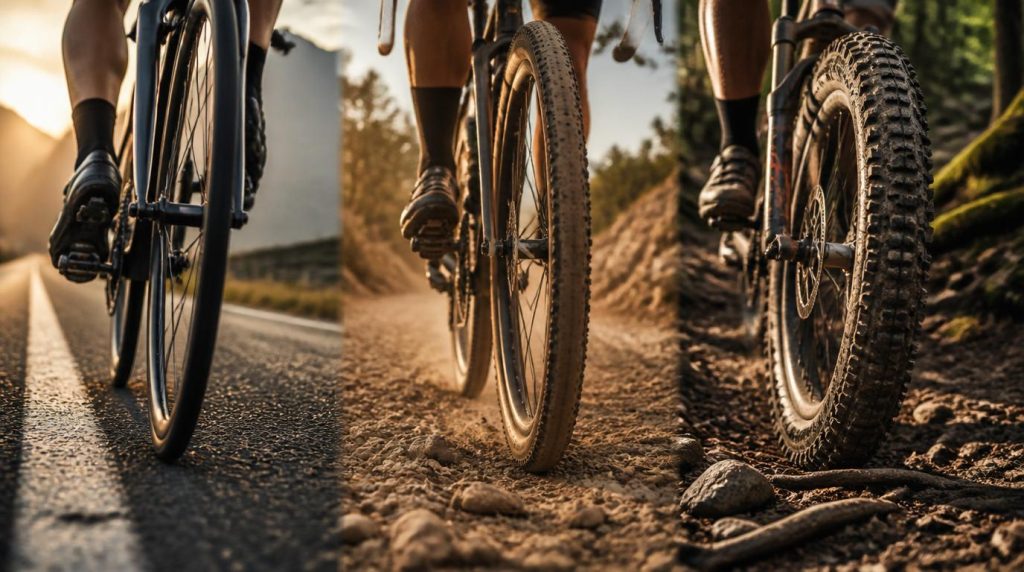
The core reason road, gravel, and MTB tires run such different pressures comes down to two connected factors: tire volume and terrain demands.
A narrow road tire (23–28mm) holds a small volume of air. To support a rider’s weight without the tire deforming excessively or bottoming out on the rim, it needs relatively high pressure — often 80–120 psi.
A wide MTB tire (2.2–2.6 inches, roughly 56–66mm) holds far more air volume. The same rider’s weight can be supported at a much lower pressure — often just 18–35 psi — because there is simply more air doing the work.
Gravel tires sit in between, both in width and in the pressures they require.
Terrain adds a second layer. Smooth tarmac rewards higher pressure for lower rolling resistance. Loose, rough, or technical terrain rewards lower pressure for grip, traction, and vibration absorption — even at the cost of slightly higher rolling resistance on smooth sections.
Road Bike Tire Pressure
Road tires are narrow and run on smooth, predictable surfaces, which allows — and requires — much higher pressure than other disciplines.
Typical Road Tire Pressure Range: 70–120 psi
| Tire Width | Light Rider (55–70 kg) | Medium Rider (70–85 kg) | Heavy Rider (85–100 kg+) |
|---|---|---|---|
| 23mm | 90–100 psi | 100–110 psi | 110–120 psi |
| 25mm | 80–90 psi | 90–100 psi | 100–110 psi |
| 28mm | 70–80 psi | 80–90 psi | 90–100 psi |
| 32mm | 60–70 psi | 70–80 psi | 80–90 psi |
Why Road Pressure Is High
On smooth tarmac, a narrow tire at high pressure minimises the contact patch and reduces energy lost to tire deformation. The road surface itself provides enough grip without needing the tire to conform to terrain irregularities the way gravel or MTB tires do.
That said, modern road cycling has moved toward wider tires at slightly lower pressures than a decade ago — 28mm and even 32mm tires at 70–90 psi are now common on endurance and all-road bikes, offering a better balance of comfort and rolling resistance on real-world road surfaces, which are rarely perfectly smooth.
Gravel Bike Tire Pressure
Gravel riding covers an enormous range of surfaces — from fast hard-packed gravel roads to loose, rocky, technical terrain — so gravel tire pressure has the widest practical range of any discipline.
Typical Gravel Tire Pressure Range: 20–50 psi
| Tire Width | Hard Pack / Gravel Road | Mixed Surface | Loose / Muddy |
|---|---|---|---|
| 35mm | 40–50 psi | 35–45 psi | 28–38 psi |
| 40mm | 35–45 psi | 30–40 psi | 25–35 psi |
| 45mm | 30–40 psi | 25–35 psi | 20–30 psi |
Why Gravel Pressure Varies So Much
Unlike road or MTB riding, where the terrain is relatively consistent throughout a ride, gravel rides often combine tarmac sections, hard-packed gravel, loose gravel, and sometimes singletrack — all in the same outing. Many experienced gravel riders adjust pressure based on the dominant terrain of a specific route, rather than using one fixed number for every ride.
Tubeless setups are particularly common in gravel riding because they allow the lower pressures needed for comfort and traction on loose surfaces without the pinch-flat risk that would come with a clincher and tube at the same pressure.
Mountain Bike Tire Pressure
MTB tires are the widest and run the lowest pressures of any discipline, because traction, control, and impact absorption matter more than minimising rolling resistance on smooth ground — terrain that mountain bikes rarely encounter.
Typical MTB Tire Pressure Range: 15–35 psi
| Tire Width | XC / Hardtail | Trail / Enduro | DH / Freeride |
|---|---|---|---|
| 2.2″ | 28–35 psi | 25–32 psi | 22–28 psi |
| 2.4″ | 24–30 psi | 22–28 psi | 18–24 psi |
| 2.6″+ | 20–26 psi | 18–24 psi | 15–20 psi |
Why MTB Pressure Is So Low
Mountain biking happens on irregular, often technical terrain where the tire needs to deform around rocks, roots, and ruts to maintain traction and control. Lower pressure increases the contact patch dramatically, improving grip on loose and technical surfaces — which matters more for safety and control than the small rolling resistance penalty on the rare smooth sections.
Tubeless setups are nearly universal in modern mountain biking for exactly this reason — they make these very low pressures (often below 25 psi) practical without constant pinch flats.
Front/rear split matters even more in MTB: Many riders run 1–3 psi lower in the front tire than the rear, since the front tire’s grip is critical for steering control, while the rear benefits from slightly higher pressure to resist squirming under power.
Side-by-Side Comparison Table
| Discipline | Typical Tire Width | Typical PSI Range | Primary Goal |
|---|---|---|---|
| Road | 23–32mm | 70–120 psi | Minimise rolling resistance |
| Gravel | 35–45mm | 20–50 psi | Balance speed and traction |
| MTB | 2.2–2.6″+ | 15–35 psi | Maximise grip and control |
The pattern is clear: as tire width increases, recommended pressure decreases — often dramatically. A road tire at 100 psi and an MTB tire at 20 psi can be supporting the exact same rider weight, simply because of the difference in air volume and the terrain they are designed for.
Why Tire Width Is the Real Driver
It is tempting to think of “road pressure,” “gravel pressure,” and “MTB pressure” as fixed categories, but the underlying physics is really about tire volume relative to rider weight, with terrain as a secondary adjustment.
This is why a 45mm gravel tire and a 2.2-inch (56mm) MTB tire — which are not drastically different in actual width — often end up in overlapping pressure ranges. The discipline label is a useful shorthand, but the real variables are:
- Tire width / volume — wider tires need less pressure to support the same weight
- Rider weight — heavier riders need more pressure regardless of discipline
- Surface roughness — rougher terrain rewards lower pressure for grip and comfort
- Tube type — tubeless allows lower pressures safely than clincher setups
This is also why our calculator asks for tire width and weight specifically, rather than just asking “road, gravel, or MTB” — the discipline label alone is not precise enough for a genuinely accurate recommendation.
How to Use a Tire Pressure Calculator for Any Discipline
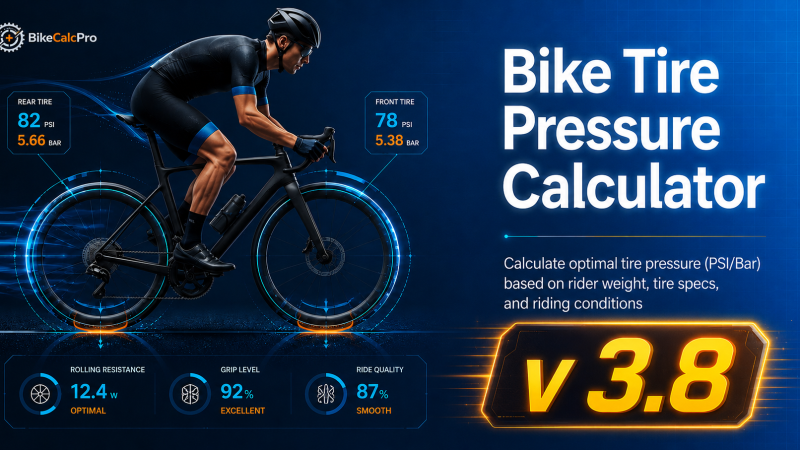
Rather than memorising separate charts for each discipline, our Tire Pressure Calculator calculates your ideal pressure directly from the variables that actually matter:
- Total weight (rider + gear)
- Tire width
- Tire type (clincher, tubeless, tubular)
- Surface/terrain type
- Optional: rim width for more precision
How to get the most accurate result across any discipline:
- Enter your actual mounted tire width, not just the labelled width — actual width can vary depending on your rim
- Select the terrain type that best matches where you ride most often
- If you switch terrain mid-ride (common in gravel), use the calculator for your dominant terrain and adjust by feel for sections that differ significantly
What Happens If You Use the Wrong Pressure for Your Bike Type
Running Road Pressure on Gravel or MTB Tires
If you mistakenly apply road-bike-level pressure (80+ psi) to a wide gravel or MTB tire, the tire becomes overly rigid, bouncing over terrain irregularities instead of absorbing them. This reduces traction significantly and makes the ride uncomfortable and harder to control on loose surfaces.
Running Gravel or MTB Pressure on Road Tires
Conversely, running 30 psi in a narrow 25mm road tire would risk severe tire deformation, rim strikes, and pinch flats on a clincher setup, along with sluggish, draggy handling from excessive rolling resistance.
Running MTB Pressure on Gravel Tires
This is less catastrophic since gravel tires sit between road and MTB, but using full MTB-low pressure on a narrower gravel tire designed for a faster, harder-pack surface can cause excessive tire squirm and rim strikes on rockier gravel sections.
The takeaway: discipline-appropriate pressure ranges exist for good physical reasons — they are not arbitrary marketing categories.
Common Mistakes to Avoid
Mistake 1: Using One Pressure for Every Bike You Own
If you own a road bike, a gravel bike, and an MTB, each needs its own pressure logic based on its specific tire width and your weight — not a single number carried over from one bike to another.
Mistake 2: Not Adjusting Gravel Pressure for the Specific Route
Gravel pressure benefits the most from route-specific adjustment of any discipline. A pressure that is perfect for a fast gravel road ride may be too high for a route with significant loose or technical sections.
Mistake 3: Assuming Wider Tires Always Need Lower Pressure Regardless of Discipline
While generally true, the relationship is not perfectly linear across disciplines — a wide gravel tire built for speed on hardpack may be specced for slightly higher pressure than an MTB tire of similar width built for technical terrain, due to differences in casing construction and intended use.
Mistake 4: Ignoring Tubeless Setup When Comparing Disciplines
Tubeless setups allow meaningfully lower pressures in any discipline. If you are comparing your pressure to a chart or another rider’s setup, confirm whether tube type matches, as this can account for a 10–15% difference on its own.
FAQ
Why does MTB tire pressure need to be so much lower than road tire pressure?
MTB tires are much wider than road tires, holding significantly more air volume, which means they can support the same rider weight at a much lower pressure. Additionally, technical off-road terrain benefits from the increased traction and impact absorption that lower pressure provides.
What is a good starting tire pressure for gravel riding?
A reasonable starting point for most gravel setups (38–42mm tubeless tires) is 30–40 psi, adjusted down for looser or more technical terrain and up for faster, harder-packed routes. Use our Tire Pressure Calculator for a number personalised to your weight and exact tire width.
Can I use the same tire pressure for road and gravel riding?
No. Road tires are narrower and run on smooth, predictable surfaces, requiring much higher pressure (70–120 psi) than gravel tires (20–50 psi), which are wider and need lower pressure for traction and comfort on rougher, looser surfaces.
Does rider weight matter more for one discipline than another?
Rider weight matters across all disciplines, but its relative impact is more noticeable in narrower, higher-pressure road tires, where a small pressure miscalculation has a bigger effect on rolling resistance and pinch-flat risk than in wider, lower-pressure MTB tires.
Why do gravel tire pressures vary so much more than road or MTB?
Gravel riding covers the widest range of surface types within a single discipline — from smooth gravel roads to loose, technical terrain — often within the same ride. This requires a wider practical pressure range and more route-specific adjustment than road or MTB riding typically need.
Summary
Road, gravel, and MTB tire pressures differ dramatically because of two connected factors: tire volume and terrain demands.
- Road: Narrow tires, smooth surfaces → high pressure (70–120 psi)
- Gravel: Medium tires, mixed surfaces → moderate pressure (20–50 psi)
- MTB: Wide tires, technical terrain → low pressure (15–35 psi)
The underlying logic is consistent across all three: wider tires and rougher terrain both call for lower pressure, while narrower tires and smoother surfaces call for higher pressure.
Ready to find your exact number for any bike? Use our Tire Pressure Calculator →