
Enter Your Measurements
Recommended Frame Size
/
Our Bike Frame Size Calculator helps you find the perfect frame based on your height and inseam length.
Select your unit system (cm or in), enter your height and inseam length, choose your bike type, and hit Calculate. Results are shown in both centimetres and inches with a letter size (XS–XXL).
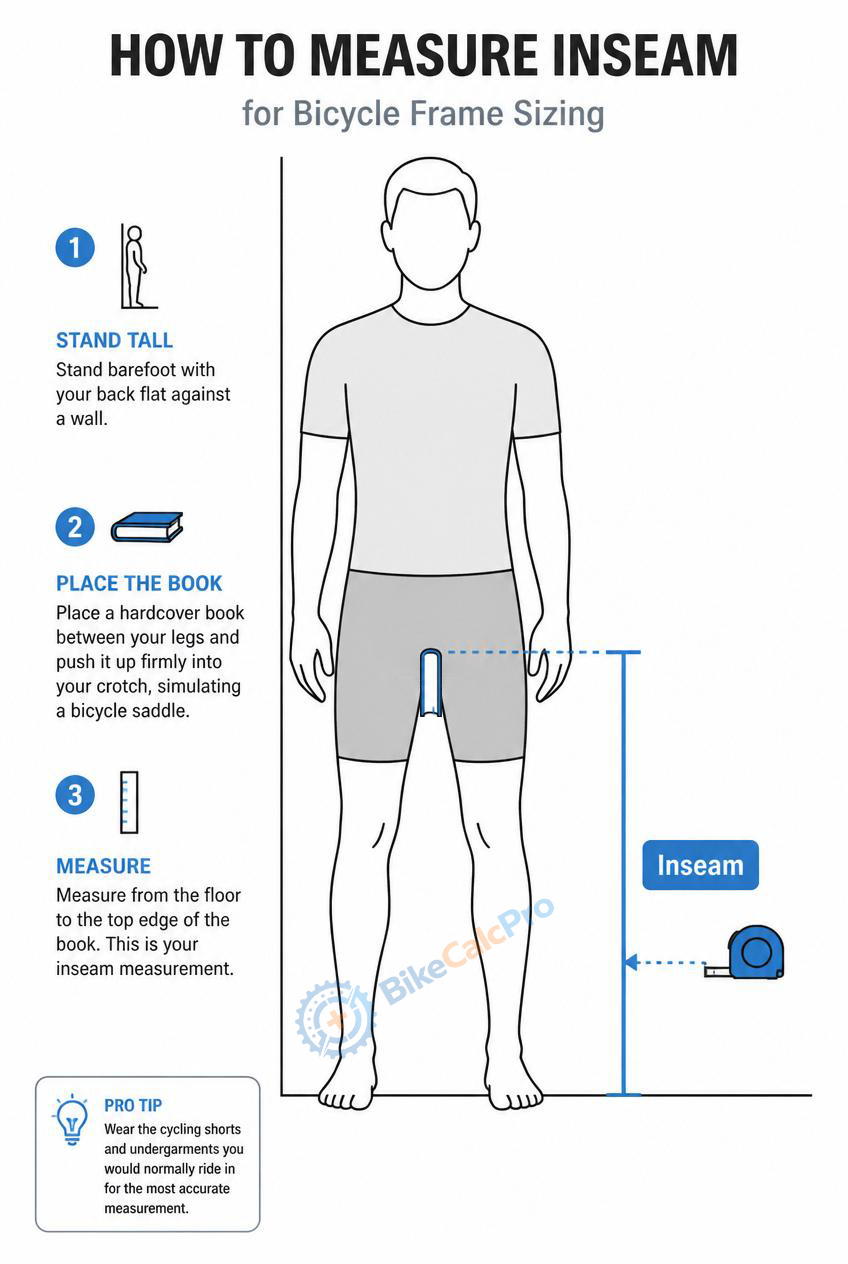
Your inseam is the most important measurement for frame sizing. Stand barefoot on a hard floor with feet 15–20 cm apart. Place a hardback book between your legs with the spine up, pressing it firmly upward as if it were a saddle. Measure from the floor to the top of the book spine — that number is your inseam.
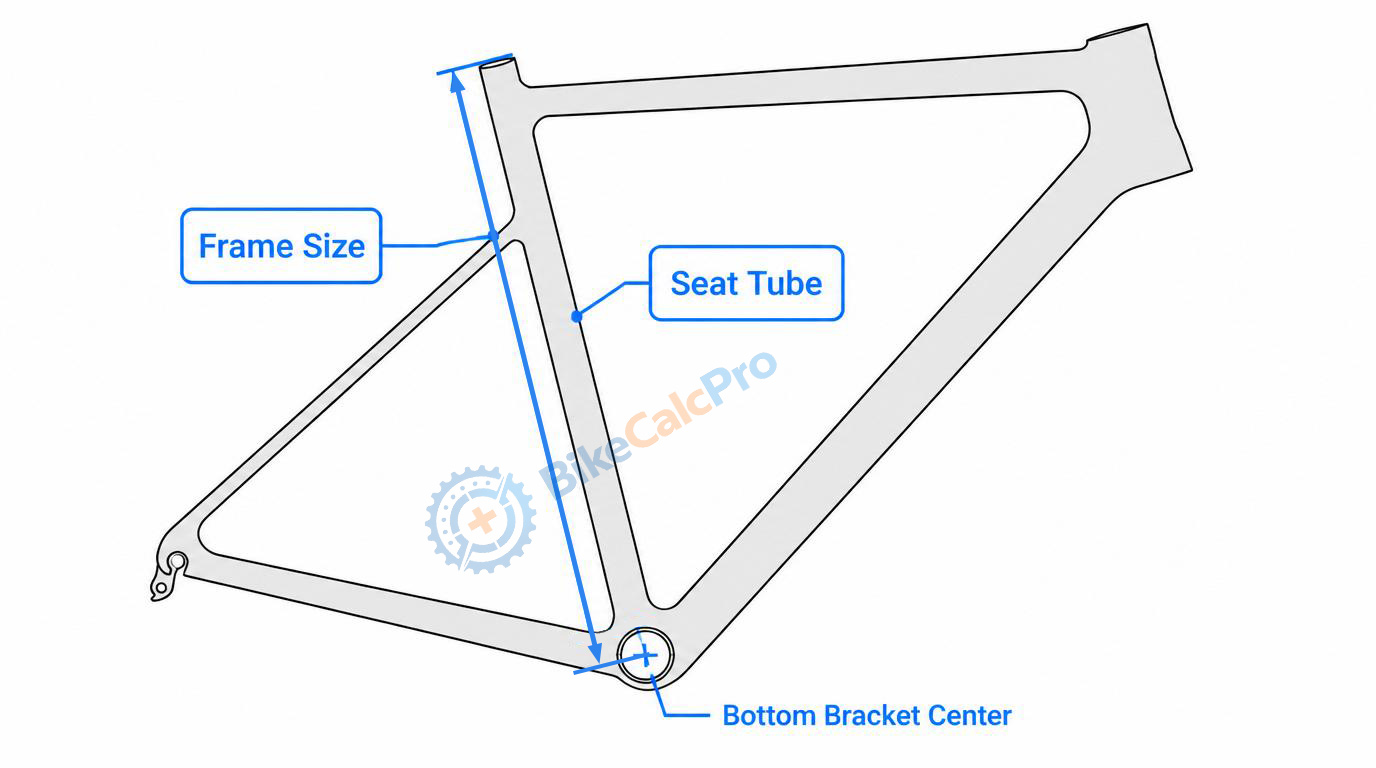
Frame size is the length of the seat tube — measured from the centre of the bottom bracket axle to the top of the seat tube. It is the single most important dimension for fit, because it determines your standover height and saddle position range.
Road and hybrid frames are measured in centimetres (typically 48–62 cm). Mountain bike frames are often listed in inches (13–23") or letter sizes (XS through XXL). Our calculator gives you both formats.
Take a rider with an 81 cm inseam on a road bike (0.67× multiplier). The formula recommends a 54.3 cm frame. A shop that only stocks 52 cm and 56 cm might round to whichever is "closer" — but a 56 cm frame on this rider pushes the saddle-to-handlebar reach roughly 2 cm further than ideal, often leading to lower back strain on rides over 60–90 minutes. The 52 cm frame, by contrast, would force a higher, more upright stem setup to compensate, sacrificing the aerodynamic position road bikes are designed for.
The gap matters more than it sounds: a 2 cm difference in effective reach is roughly the same adjustment range available from swapping a stem length — meaning the "wrong but close" frame size eats up adjustability you'd otherwise have for fine-tuning fit, leaving no room to correct for flexibility or riding style.
This is also why bike type changes the outcome so much. That same 81 cm inseam on a mountain bike (0.58× multiplier) recommends just 47 cm — over 7 cm smaller than the road figure — because MTB geometry prioritises standover clearance for technical terrain over the low, stretched-out position road cycling rewards.
Go smaller for a more responsive, sporty ride with more handlebar drop available. Go larger for a more upright, comfortable position with more reach. If in doubt, most riders are happier on the smaller size — you can always raise the saddle and stem, but you cannot shorten a frame.
Yes — the inseam multiplier is identical regardless of gender. However, women-specific bikes often feature a shorter top tube, narrower handlebars, and a different saddle. Always verify with the manufacturer's own size chart for your specific model.
Each bike type uses a different inseam multiplier reflecting its intended riding position. Road bikes (×0.67) put you in a low, aerodynamic position. Mountain bikes (×0.58) leave more standover clearance for technical terrain. Hybrid and city bikes (×0.65) sit in between for an upright, comfortable posture.
Frame geometry varies between manufacturers. A 54 cm Trek may feel like a 56 cm Specialized due to differences in top tube length, head tube angle, and stack/reach. Our calculator gives an accurate starting point based on seat tube length; always consult the brand's own fit guide or visit a bike shop for a professional fitting.
Yes — frame sizing works the same way for electric bikes. The geometry and seat tube measurement follow the same principles. The added weight of an e-bike does not change the frame size formula.
⚠️ Note: Frame size recommendations are a starting point based on established industry formulas. Body proportions, flexibility, and riding style vary between individuals, and manufacturer geometry differs between brands and models. Always test ride before purchasing.


